Stock Market Crash in Indonesia: What Should Beginner Investors Do When the JCI Falls?
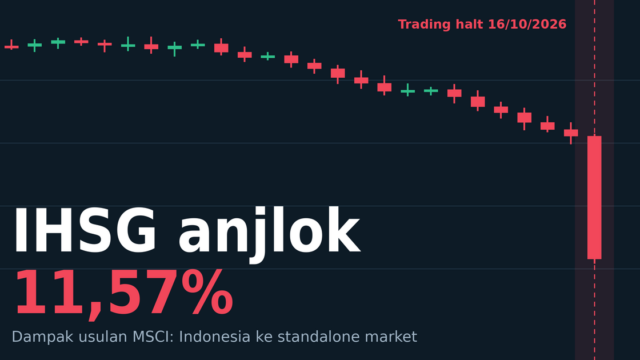
You open your brokerage app and everything is red. If that’s what you’ve seen lately, you’re not alone. The index (IHSG, or JCI) fell 11.57% on October 16, 2026 after the MSCI proposal, and trading was briefly halted. Investors who joined the market this year may be feeling a shock like this for the first time. idntimes
This is not stock advice. It is a guide to mindset and habits so you avoid decisions you’ll regret. For the background on what happened, see our main article on the JCI and MSCI.
1. Breathe first, and don’t decide in a panic
The costliest buy and sell decisions are usually made in the most emotional hours. When prices drop fast, the brain pushes you to “save what’s left” right now. Give yourself at least one day before selling anything out of fear.
2. Understand what actually happened
Not every decline is the same. Some happen because a company’s business is getting worse, and others because of market-wide sentiment. Here, the trigger is market classification, not each company’s financial results. Note also that the MSCI proposal is still in a consultation period, and the final decision is due no later than June 30, 2027. So it is not final. cnbcindonesiaidntimes
Pressure on the market also has more than one cause. Analysts cite MSCI concerns, geopolitical escalation, and a hawkish Fed outlook as jointly limiting a recovery. cnbcindonesia
3. Ask yourself: what money is this?
The most important question for a beginner:
- If it is long-term money (five years or more), big swings are easier to tolerate.
- If it is an emergency fund or money needed soon (loan payments, tuition, monthly bills), you have a real problem, and it is a lesson for next time: that kind of money doesn’t belong in stocks.
4. Avoid three classic mistakes
- Selling everything at the bottom. Paper losses become real losses.
- Buying heavily because it’s “on sale.” Cheap isn’t always cheap. Markets can fall further.
- Adding positions with debt or margin. In a highly volatile market, this is one of the fastest ways to lose capital.
5. Check the quality of your portfolio
Use this moment to review, not just wait. Ask yourself:
- Do I understand the businesses I own?
- Is my portfolio too concentrated in one or two stocks?
- Did I buy only because I followed recommendations on social media?
If the answers worry you, it’s a sign to improve the portfolio, not simply to wait for prices to rise.
6. Consider investing in stages
A strategy beginners often use is dollar cost averaging: buying a fixed amount at regular intervals, such as monthly, without trying to guess the bottom. It reduces the pressure of timing the market. But it does not remove the risk of loss, and it only makes sense for assets you believe in.
7. Stop checking prices every minute
Checking your portfolio every few minutes only adds stress and triggers impulsive decisions. Set a review schedule, such as once a week, and stick to the investment plan you wrote down.
What to watch next
- Bank Indonesia’s Board of Governors meeting on October 20–21, 2026. idntimes
- The MSCI Index Review announcement in November, with regular changes effective December 1. cnbcindonesia
- Regulator and exchange moves on shareholder ownership transparency.
FAQ
Stocks are falling. Should I sell or hold?
There is no single answer. It depends on your goals, time horizon, and finances. If the money is long-term and you believe in the company’s business, many investors choose to hold. If you need the money soon, the situation is different.
Is this a good time to start investing?
No one can pinpoint the market bottom. If you want to start, many investors enter gradually with an amount they can afford to lose.
Should I talk to a financial planner?
If you’re unsure or the amount is large, yes. A planner can tailor advice to your personal situation.
Disclaimer: This article is educational and is not investment advice or an invitation to buy or sell any security. We are not licensed financial advisers. Investment decisions are entirely your responsibility.